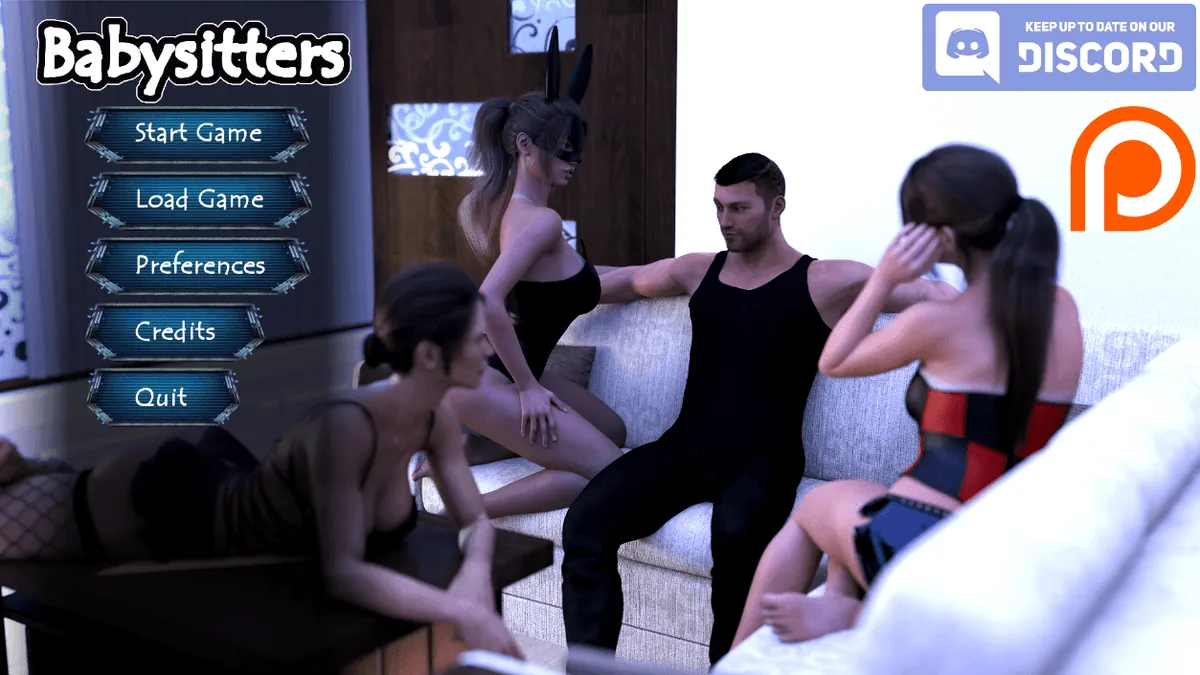
Babysitters
Play Babysitters
Babysitters Screenshots









Babysitters review
Master every choice, unlock all scenes, and maximize your gameplay experience
The Babysitters game offers players an immersive interactive experience where every decision shapes your journey and relationships with characters. Whether you’re new to the game or looking to unlock all scenes and maximize your points, understanding the mechanics of choices and their consequences is essential. This guide provides detailed insights into character interactions, relationship building, and strategic decision-making to help you navigate the game successfully. From managing your reputation to discovering hidden content, we’ll walk you through everything you need to know to get the most out of your Babysitters experience.
Understanding Game Mechanics and Choice Systems
Ever feel like you’re just clicking through a story, only to hit a wall where the character you like suddenly shuts you out? 😤 I’ve been there. You think you’re being nice, but the game has a different idea of what “nice” means. In Babysitters, every chat, every glance, every decision is a thread in a larger tapestry. Get one thread wrong, and the whole picture can change. 🧩
This isn’t just a visual novel; it’s a relationship simulator where your dialogue options consequences are real, immediate, and sometimes painfully permanent. The magic—and the frustration—lies in its branching narrative gameplay. To truly master it, to unlock every heart-pounding scene and intimate moment, you need to become a strategist. This guide is your playbook. We’re going deep on the game mechanics guide, turning those confusing [Character+1] pop-ups into a roadmap for success.
Let’s break down the system so you can stop guessing and start achieving every ending you desire. 🎯
How Choices Impact Character Relationships
At its heart, Babysitters is about connection. Every major character has a hidden meter tracking their opinion of you—their character relationship points. Think of these points as a currency more valuable than money in the game. They are the literal key to unlocking scenes Babysitters fans talk about.
The game communicates these shifts with subtle (and sometimes not-so-subtle) notifications. You’ll see flashes like [Sarah +2] or [Emma -1] after a line of dialogue. It’s the game’s way of giving you instant feedback. But here’s the crucial part: these points aren’t just a score. They are gatekeepers. Reach a certain threshold with a character, and new Babysitters game choices will appear in future interactions. Fall below it, and doors slam shut, sometimes without you even knowing what you missed. 😨
I learned this the hard way with Mia. Early on, I played the “nice guy,” agreeing with everything and avoiding conflict. Sounds safe, right? Wrong. Mia values confidence and a bit of playful challenge. By always being agreeable, I maxed out a “Friendly” path but completely locked myself out of her more romantic and tense story arcs. I had to replay three hours of gameplay because I hadn’t understood that “kind” doesn’t always mean “rewarding.”
The types of choices you make are crucial. Is your response Flirty, Cocky, Kind, or Honest? Each character has a unique personality and responds differently. Emma might melt at a flirty compliment but see the same line as insincere if she’s in a suspicious mood. This is where understanding context and character history within the branching narrative gameplay is essential.
To help you visualize this, here’s a breakdown of how general choice types tend to influence key characters. Remember, context can modify these!
| Choice Type | Impact on Sarah | Impact on Emma | Impact on Mia | General Strategy Tip |
|---|---|---|---|---|
| Flirty 😘 | Often positive, but can backfire if used too early before trust is built. | High risk, high reward. Loves confidence but hates sleaziness. | Very effective. Encourages her playful and dominant side. | Best used after establishing a basic rapport. Don’t lead with it. |
| Cocky / Confident 😎 | Mixed. She respects strength but dislikes arrogance. | Extremely effective. She is drawn to assertive personalities. | Essential. Shows you can match her energy and aren’t easily pushed around. | A safe default for many characters when unsure. Better than being passive. |
| Kind / Supportive 🤗 | Consistently positive. Builds a foundation of trust and safety. | Can be seen as weak or boring if overused. Use strategically. | Low impact. Maintains friendship but doesn’t advance romance. | The “safe” path for avoiding negative points, but may not open exciting scenes. |
| Honest / Direct 🗣️ | Respected in serious moments. Can create deep connection. | Appreciated, especially if it involves being upfront about your intentions. | Neutral. She prefers action and subtext over straightforward talk. | Crucial during key investigative moments or confrontations. |
Beyond dialogue, your actions weigh heavily. The USB investigation mechanic, the decision to peek in a handbag, or how you examine certain pictures are monumental choice points. These aren’t just curiosity checks; they are tests of your character’s morality and discretion, and the consequences can ripple through the entire story, affecting how multiple characters perceive you. Getting caught snooping can devastate character relationship points across the board.
Tracking Points and Unlocking Hidden Content
So, the game is tracking all these points… but where’s the UI? Where’s the menu that shows me I’m at “85/100 Affection” with Sarah? 🤔
Here’s the ingenious (and occasionally maddening) part of this game mechanics guide: Babysitters doesn’t give you a visible meter. You have to be your own detective. The [+/-] notifications are your primary clues, but the real tracking happens in the game’s environment and dialogue. A character will start using warmer language, standing closer, or offering you options that simply weren’t there before. This is how you know your character relationship points are hitting the right levels.
Unlocking scenes Babysitters style is all about hitting specific point thresholds and making key narrative choices in the correct sequence. The game’s gallery isn’t just a reward; it’s a puzzle log. Each locked picture represents a path not taken, a combination of Babysitters game choices you haven’t yet made.
Let’s talk about the investigation features, as they are a major hub for hidden content:
* The USB Drive: This isn’t just a collectible. When you choose to investigate it, you’re committing to a path of curiosity (or suspicion). The scenes it unlocks are often secretive, dramatic, and can drastically alter your understanding of the story. Choosing to ignore it is equally valid, leading to a more trusting, perhaps naive, playthrough.
* The Handbag Peek & Picture Examination: These are classic “moment of temptation” choices. They might give you immediate info or a slight point boost with one character, but risk catastrophic point loss and lost trust if discovered. They are perfect examples of dialogue options consequences being tied to physical actions, not just words.
Pro Tip: The game remembers everything. Early, seemingly innocent choices can be referenced chapters later. A character might say, “I remember you were really understanding about my situation back then,” opening up a new, vulnerable conversation. This is the branching narrative gameplay at its finest—a truly reactive world.
So, how do you track this without a guide? My method is simple: take notes. 📝 Old school, but effective. Jot down major choices and the reactions they triggered. When you finally unlock a special scene, note what you did just before it. You’ll start to see patterns—”Ah, I need to have +5 or more with Emma before the pool scene to get the private massage option.” This is the core of how to maximize points and access.
Q: I can’t unlock the “Midnight Swim” scene with Sarah. What am I missing?
A: This is a classic threshold scene. You need to have accumulated enough positive points with Sarah by being consistently supportive and choosing her side in earlier arguments. Most importantly, you MUST have investigated the family photo album in Chapter 3 and discussed it with her. If you skipped that investigation, the path is locked.
Q: Do points decay over time, or do bad choices permanently ruin a route?
A: Points are generally cumulative, but a single massive negative choice (like a major betrayal or getting caught red-handed) can permanently lock you out of a character’s deeper routes. Smaller negatives can be overcome with subsequent positive choices, but the game has “point of no return” moments for each storyline.
Q: How do I know if I’m on the “romance” path vs. just the “friend” path for a character?
A: The dialogue shifts subtly. On a friend path, conversations stay general and supportive. On a romance path, you’ll get more private, one-on-one moments, dialogue options become more intimate (lingering looks, touch-oriented choices), and the character will start confessing personal secrets or desires to you.
Q: Is it possible to max points with all characters in one playthrough?
A: Almost impossible. Many **Babysitters game choices** are mutually exclusive—helping one character often means slighting another. The game encourages specialization and replayability. Your goal for one run should be to focus on 1-2 characters.
Strategic Decision-Making for Maximum Outcomes
Now for the fun part: playing like a master. This isn’t about brute-forcing your way through; it’s about elegant strategy. To truly master how to maximize points and experience the full scope of the branching narrative gameplay, you need a plan.
1. Embrace the Save Scum (It’s a Feature, Not a Cheat!)
The single most powerful tool in your arsenal is the save function. Before any major decision—a confrontation, an investigation, a romantic advance—create a new save file. I label mine things like “Pre_Pool_Party_Choice” or “Before_USB_Decision.” This allows you to bravely explore the dialogue options consequences without fear. See what that cocky line does, and if it crashes and burns, reload and try the kind approach. This is the best way to learn the game’s internal logic and map out its branches.
2. Specialize Your Playthroughs
Trying to make everyone happy is a recipe for a mediocre, middle-of-the-road ending. On your first playthrough, pick a primary character and a secondary character. Make choices that favor them, even at the expense of others. This focused approach is the most reliable way to see the most content for those characters and understand their full story arcs. You’ll get far more satisfying results than by spreading your points thinly.
3. Read the Room (and the Subtext)
The game gives you environmental clues. Is the character smiling nervously? Are they avoiding eye contact? Is the music tense or romantic? Use this context to inform your choice. A flirty line during a serious, emotional confession will likely net you [Character-3], while the same line during a playful, relaxed moment might earn you [Character+2]. This game mechanics guide can’t give you a script; it teaches you to be observant.
4. Prioritize Investigation Choices for Narrative Depth
If your goal is to see the story’s secrets, you must engage with the investigative mechanics. Choose to examine the USB, to look closer at the cryptic text message, to ask the probing follow-up question. These choices often don’t give immediate character relationship points (and might even cost a few), but they unlock entire secondary plotlines and scenes that explain the mysteries swirling around the main story. They are essential for unlocking scenes Babysitters players often miss on a casual run.
5. Don’t Fear Negative Points (Sometimes)
It sounds counterintuitive, but sometimes a small, strategic negative reaction can lead to a better long-term outcome. A character might respect you more for standing your ground ([Small -1] initially) than for being a pushover ([+0]). This can set up a more authentic, stormy relationship path that has its own unique, passionate scenes. Not every path to maximizing points is a straight, positive line.
Remember, Babysitters is designed to be played more than once. Your first run should be for immersion—make choices as you genuinely feel. Then, use subsequent runs to target specific outcomes, armed with the knowledge of how the game mechanics guide your journey. The joy is in discovering how a single different choice in Chapter 1 can completely reshape the events of Chapter 7. That’s the power and replayability of a masterfully crafted branching narrative gameplay experience. Now go forth, save often, and leave no scene unlocked! 💪
Mastering the Babysitters game requires understanding how your choices ripple through the narrative, affecting character relationships and unlocking unique content. By strategically managing your dialogue options, tracking relationship points, and exploring different decision paths, you can experience everything the game has to offer. Whether you’re aiming to build specific relationships, unlock all gallery scenes, or discover hidden mechanics, the key is experimenting with different approaches and learning how each choice shapes your journey. Take your time exploring the various paths available, and don’t hesitate to replay sections to experience alternative outcomes. The depth of the game’s choice system rewards players who engage thoughtfully with the mechanics and character interactions.