Seeking Closure
Play Seeking Closure
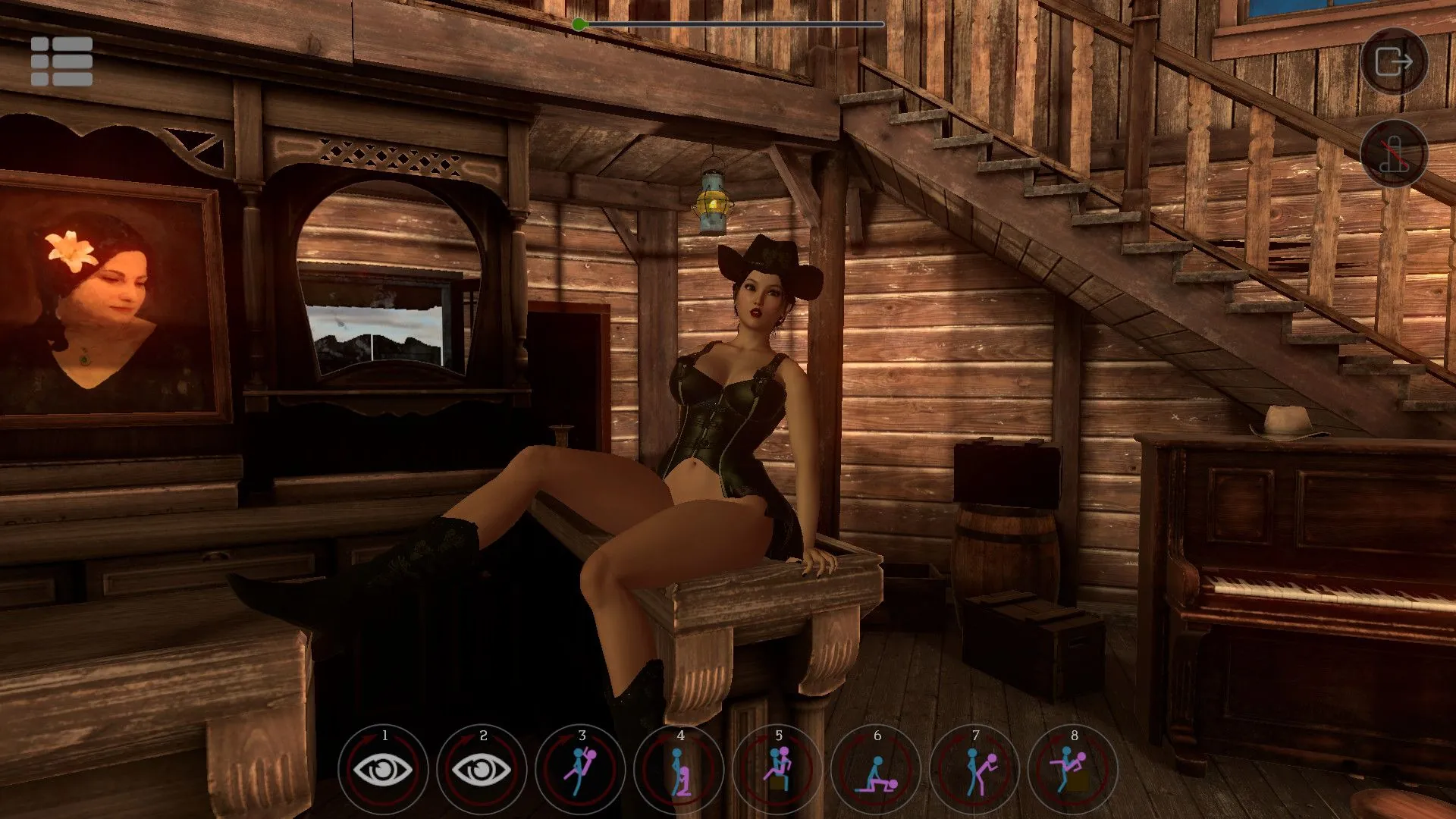
Seeking Closure Screenshots













Seeking Closure review
Explore the narrative-driven experience with animated scenes and branching storylines
Seeking Closure stands out as a narrative-rich visual novel that combines storytelling with interactive gameplay. Developed by Captain Crystallo, this title invites players into a compelling mystery centered around a tragic accident that unfolds across multiple timelines. The game features 20 distinct scenes, 820 high-quality renders, and 7 animated sequences that bring the story to life. Whether you’re a fan of visual novels, mystery narratives, or character-driven experiences, Seeking Closure delivers an engaging journey that challenges you to uncover the truth behind a life-altering disaster. This guide explores everything you need to know about the game, from its core mechanics to technical specifications.
Understanding Seeking Closure: Story, Setting, and Gameplay Mechanics
Ever been on a trip that was supposed to be the perfect getaway, only to have one tiny decision spiral into something you couldn’t take back? 😅 That’s the gut-punch premise of Seeking Closure, a narrative experience that grabs you from the first click. You’re not just playing a game; you’re stepping into a life-altering mystery where every conversation matters and every choice echoes across time.
This isn’t your typical whodunit. The Seeking Closure story plot begins with a relatable slice of life: a protagonist and their friends head to a mountain resort for a final, carefree vacation before the responsibilities of college set in. It’s all skiing, laughter, and bonding. But a single, seemingly minor mistake triggers a catastrophic disaster. The central question isn’t just “what happened?” but “how could it have happened?” and, more importantly, “could it have been stopped?” 🏔️➡️😨
To find those answers, you’ll need to master the unique visual novel gameplay mechanics at the heart of this experience. Forget linear storytelling. Your tool for truth is the ability to jump through different periods of the protagonist’s life. This timeline mystery game structure means you’ll piece together the tragedy not as a single event, but as a fragile chain of moments, relationships, and secrets stretched across years.
What Makes Seeking Closure’s Narrative Unique?
Most stories move forward. Seeking Closure asks you to move outward, inward, and backward. The core brilliance of this Seeking Closure visual novel lies in its treatment of cause and effect. The disaster at the resort isn’t presented as a singular bolt from the blue. Instead, the narrative expertly weaves the idea that the true “cause” might be buried in forgotten conversations, strained friendships, or unresolved tensions from long before the trip even began.
Think of it like detective work on a human soul. 🕵️♂️💖 The game presents you with 20 key scenes—like chapters in a memory book—that you can explore in a non-linear fashion. One scene might be a lighthearted moment from childhood, while the next drops you into the tense hours leading up to the accident. By hopping between these moments, you start to see patterns. A character’s fear in the present might stem from a trauma in their past, which you haven’t witnessed yet. It’s a deeply satisfying puzzle where the pieces are emotions and memories.
The interactive narrative choices you make are subtle yet powerful. They rarely scream “SAVE THE WORLD” or “DOOM EVERYONE.” Instead, they’re the quiet decisions of daily life: Do you comfort a friend who seems down? Do you press someone for a truth they’re hiding, or let them keep their secret? Do you intervene in an argument, or let it play out? These choices directly influence your relationships, and those relationships are the literal keys to unlocking new scenes and perspectives on the Seeking Closure story plot.
And yes, this is an adult-oriented experience. The animated 3DCG scenes are part of this narrative fabric. They’re not just titillation; they’re moments of profound vulnerability, intimacy, or sometimes, manipulation. They can represent a peak of connection between characters or a low point of using intimacy for other ends. Understanding the nature of these relationships is often crucial to understanding the larger mystery. Do they represent genuine bonds, or are they part of the shaky foundation that led to catastrophe?
How Do Relationship Mechanics Drive the Mystery Forward?
In many games, building relationships is a side activity. In Seeking Closure, it is the main activity. This is relationship building visual novel design at its most integral. You can’t brute-force the mystery by examining clues in a vacuum. The truth is held by people—the Seeking Closure characters—and they will only share it if they trust you, like you, or feel compelled by your actions.
Each character is a vault of information, and your rapport with them is the combination. A character you’ve bonded with might confess a crucial detail in a private moment—a detail they’d never mention if you’d been cold or dismissive. Another might only reveal their true feelings during a moment of romantic or physical intimacy, making those connections a legitimate path of investigation.
From my own playthrough, I learned this the hard way. I focused solely on the “logical” timeline jumps, trying to reconstruct the event like a crime scene analyst. I hit a wall. 🧱 It wasn’t until I replayed and invested time in simply talking to a seemingly peripheral character, listening to their fears about the future, that they casually mentioned seeing something strange on the mountain the day before the trip. That one comment opened up an entirely new branch of scenes I had missed.
The Seeking Closure characters are beautifully flawed and real. They’re not just archetypes; they’re bundles of insecurities, hopes, and secret histories. Your goal is to navigate these human complexities. The gameplay loop is investigative but deeply social:
1. Talk to everyone in a given scene. Exhaust all dialogue options.
2. Use your interactive narrative choices to respond in ways that strengthen bonds.
3. Unlock new scenes in the timeline based on those improved relationships.
4. Piece together the new information from those scenes to form a clearer picture.
5. Repeat, weaving a wider and deeper web of understanding.
It’s a reminder that tragedies are rarely about things; they’re about people. The game forces you to ask: Was the accident a tragic twist of fate, or were there preconditions—a lie here, a broken promise there, a hidden jealousy—that made the group a ticking time bomb?
Exploring the Timeline Structure and Player Choices
The timeline is your playground and your map. This is where the visual novel gameplay mechanics truly sing. You won’t find a traditional level select screen. Instead, you’ll interact with a thematic representation of the protagonist’s life. Selecting a memory from childhood might be as simple as clicking on a toy, while a scene from the disastrous trip might be represented by a ski pole. 🎿
This non-linear approach is liberating. You are in control of the narrative’s pace and focus. Stuck on a plot point in the “present”? Jump “back” to see how two characters first met. Notice a character acting oddly in a past scene? That might be the key to understanding their actions during the central disaster. The connections you make are your own “aha!” moments, and they feel incredibly earned.
Your interactive narrative choices are the engine of this structure. The game tracks your decisions meticulously, often in ways you won’t see immediately. A kind word to a character in Scene 5 might give you a unique, more open dialogue option with them in Scene 15. Conversely, a harsh truth delivered in Scene 8 might lock you out of their confidence later on. There’s no “good” or “bad” choice in a vacuum—only choices that shape the web of relationships you’re building.
To give you a clearer picture of the journey, here’s a breakdown of how the 20 scenes structure the narrative:
| Scene Block | Thematic Focus | Connection to Central Mystery |
|---|---|---|
| Scenes 1-5: Foundation | Childhood memories, early friendships, and formative experiences. The origins of key relationships. | Establishes the core dynamics between characters. Hidden insecurities and promises that will echo for years are formed here. |
| Scenes 6-12: Buildup | Adolescence and the planning of the fateful trip. Growing tensions, budding romances, and unspoken anxieties. | Shows the cracks forming in the group’s foundation. The “preconditions” for disaster—miscommunications, secrets, and pressures—are all in play. |
| Scenes 13-17: The Event & Immediate Aftermath | The ski resort vacation and the catastrophic accident itself. The immediate shock and confusion. | The focal point of the mystery. Played from multiple limited perspectives. Your choices here directly determine which character’s truths you uncover first. |
| Scenes 18-20: Resolution & Revelation | Confronting the full truth. Piecing together timelines and motivations across the years. | The payoff. Where all your gathered information coalesces. You learn not just *what* happened, but *why*, and what it means for everyone’s future. |
This structure ensures that the Seeking Closure story plot is always moving on two levels: the chronological march toward the disaster, and your own psychological excavation backward and sideways to understand it. The final picture you assemble—whether you see the event as a tragic accident or the inevitable result of human frailty—is a direct result of the paths you’ve chosen to walk and the people you’ve chosen to trust.
Pro Tip: Don’t be afraid to replay early scenes after building relationships later in the timeline. You’ll often find that characters have entirely new things to say, as your shared history with them has changed! 🔄
FAQs: Your Seeking Closure Questions Answered
-
Q: How long is the Seeking Closure visual novel?
- A: A single, focused playthrough takes about 4-6 hours. However, to experience all the story branches, unlock every scene, and see the full scope of the Seeking Closure story plot, you’ll likely need multiple playthroughs, which can easily double that time.
-
Q: How impactful are my choices really?
- A: Extremely impactful. The interactive narrative choices dictate which Seeking Closure characters open up to you, which scenes you can access, and ultimately, which version of the truth you uncover. There are multiple endings that reflect your unique journey through the relationships and timelines.
-
Q: Is the game purely a visual novel, or are there other gameplay elements?
- A: It is a pure visual novel gameplay mechanics experience. The gameplay is entirely centered on reading, making dialogue and narrative choices, and navigating the timeline menu. The “investigation” is social and psychological, not mechanical.
-
Q: Do I need to guide the protagonist toward romantic relationships to solve the mystery?
- A: Not exclusively, but it helps. Intimacy is a powerful tool for unlocking deep truths in this relationship building visual novel. Some critical insights are only shared in moments of deep personal connection. Exploring these paths is often necessary for a complete understanding.
-
Q: Is the story depressing?
- A: It deals with heavy themes of tragedy, guilt, and memory, but it’s not unrelentingly bleak. The core drive is one of understanding and, as the title suggests, finding closure. There are moments of warmth, humor, and genuine human connection that make the journey compelling and ultimately hopeful.
Seeking Closure represents a compelling entry in the visual novel genre, offering players a mystery-driven experience that rewards careful attention to character relationships and narrative details. With its 20 scenes, 820 renders, and 7 animated sequences, the game delivers a visually engaging story about uncovering truth after tragedy. The relationship-building mechanics create meaningful player agency, allowing you to shape how the narrative unfolds through your interactions with other characters. Whether you’re drawn to mystery narratives, character-driven storytelling, or the visual novel format itself, Seeking Closure provides an immersive experience that encourages multiple playthroughs to discover different story outcomes. The game’s compatibility with various Windows operating systems makes it accessible to a broad audience of PC players. If you’re interested in narrative-focused games that blend mystery, character development, and interactive choice-making, Seeking Closure deserves a place in your gaming library.